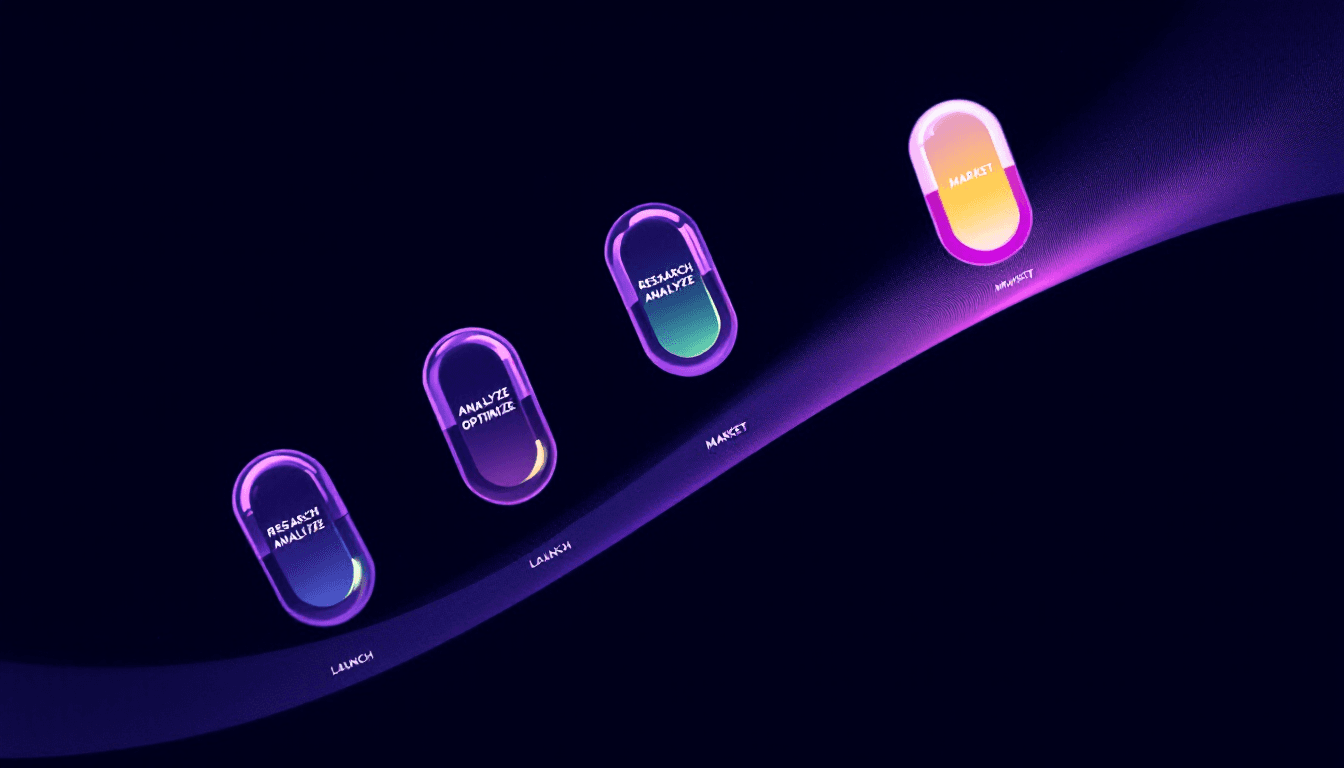
A concrete, no-fluff playbook for indie devs and solo founders. The five stages every app moves through (research, analyze, optimize, launch, market) with the exact moves that compound into installs.
Most indie apps don't fail because the code is bad. They fail because nobody finds them, and the ones who do can't tell what the app does in three seconds. The fix isn't a redesign. It's a process. Below is the one I run myself, broken into the five stages every app moves through.
1. Research: validate before you build
Pick the wrong niche and nothing downstream matters. Before writing a line of code, do three things:
- Mine the keywords. Pull every term users actually type when looking for an app like yours. Rank them by search volume and difficulty. The top-30 list becomes your north star for everything from product naming to landing copy.
- Audit the top 5 competitors. What words are in their titles? Their subtitles? What screenshots do they lead with? What do their 1-star reviews complain about? Those complaints are your differentiation brief.
- Score the opportunity. If the top result has 50k installs and a 4.6 rating, you can compete. If it has 10M installs and Apple features it monthly, you probably can't. Be honest with yourself here. It saves months.
2. Analyze: score your draft listing against the leaders
Once you have a working build, draft a listing and compare it against the top 5 in your category. Specifically:
- Does your title carry the primary keyword in the first 5 characters? (Apple weights these heavily.)
- Does your first screenshot communicate the core promise in under 3 seconds, with no text smaller than 24pt?
- Does your description front-load the outcome the user gets. Not the features your app has?
Most indie listings break all three. A 30-minute audit catches 80% of what's costing you conversions.
3. Optimize: five variants, one ship
Generate at least five title-and-subtitle variants. Score each on keyword coverage, character efficiency (Apple gives you 30 chars for the title. Every one counts), and clarity. Pick the strongest, ship it, measure for two weeks, then iterate.
Don't spend a month polishing one perfect listing. Ship the best variant you have today; the real signal comes from live impressions, not your gut.
4. Launch: the boring parts that quietly kill momentum
A pre-flight checklist worth taping to your monitor:
- Apple Search Ads account created + at least one campaign live (even small).
- Crash reporting wired and alarms set.
- Privacy nutrition label filled honestly. Apple rejects last-minute fixes.
- App Store Connect screenshots uploaded for every supported device class.
- A soft-launch playbook: which country first, which keyword to monitor day-1, what to do if reviews start rough.
5. Market: drive installs from day one
Launching to zero traffic is a tax. Three cheap, repeatable moves that compound:
- One short video per week. 30 to 60 seconds. Show the app doing the one thing it does best. Post to TikTok, Reels, and Shorts.
- One build-in-public post per week. Numbers, mistakes, what you learned. Indie devs trust other indie devs.
- One review request per active user. Wire it into the right moment. After a successful action, not on first launch.
Why one workspace beats five tools
The five stages above are why AsoGrove exists. Doing them across AppTweak, Sensor Tower, ChatGPT, your screenshot generator, and a spreadsheet is what kills momentum. One workspace, one cadence, and the loop closes itself. Founding seats open soon at €49/mo for life. 50 seats total. Get on the waitlist.