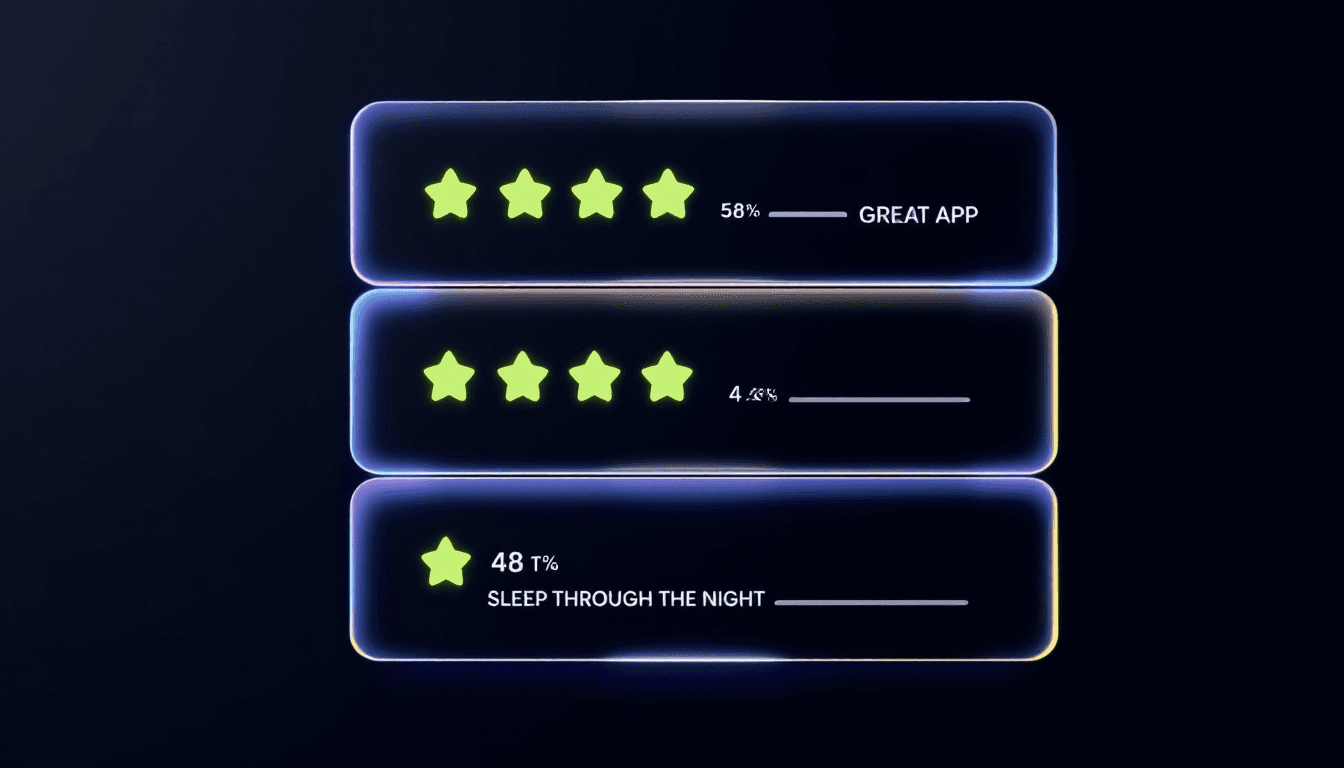
App Store reviews are not social proof. They are keyword fuel. Apple indexes review text. The right prompt at the right moment gets buyers to write the exact language your listing needs to rank for. The framework most indie devs miss.
App Store reviews are not social proof.
They are keyword fuel.
Apple indexes review text. The right prompt at the right moment gets buyers to write the exact language your listing needs to rank for. The wrong prompt gets you five-star reviews that say "great app" and contribute nothing to discovery. Most indie devs read reviews for the vanity. The higher-leverage move is to design them as inputs to the ranking algorithm.
Reviews as a ranking signal, not a vanity metric
Two structural facts. First, Apple has confirmed in developer guidance that the App Store algorithm reads review text as a relevance signal. The exact weight is not published, and any blog claiming a precise percentage is making it up. What is true is that reviews containing your category keywords correlate with ranking for those keywords. Second, reviews containing outcome language ("I finally sleep through the night") carry more weight than reviews containing brand-name praise ("love this app").
That means a five-star review reading "great app, easy to use" helps your star average and your listing tile in social shares. It does almost nothing for ranking. A four-star review reading "built a 60-day habit streak with the morning routine reminders" does the ranking work even though the star count is lower.
Indie devs who only chase the star average leave the keyword leverage on the table. The framework below recovers it.
When to ask for the review
Apple's `SKStoreReviewController` is the only sanctioned way to prompt for an in-app review on iOS. Apple rate-limits the prompt: three times per app per 365-day period maximum. Burn the three prompts on the wrong moments and you have no retries.
The right moment is not first launch. It is the first time the buyer experiences the outcome. Three patterns:
Streak app. Trigger the prompt the moment the buyer completes day 7 of a streak. They have the outcome in their hand. They will write about it.
Finance app. Trigger the prompt the moment the buyer logs a month of expenses and sees the first summary view. They have just felt the value. They will write about the clarity.
Utility app. Trigger the prompt the moment the buyer completes the third successful action. Three actions proves the utility works. Less than three is too soon.
First launch is the worst moment. The buyer has no outcome yet. The review that lands is "haven't used it much, seems okay," which Apple indexes as low-signal text.
The review-prompt framework
Apple's native prompt is fixed. You cannot edit the copy. What you can edit is the in-app moment that precedes the prompt. Three elements:
- The before-prompt screen. Show the outcome the buyer just experienced. Streak count. Expense summary. Successful action count. The screen anchors what the buyer will write about.
- The transition. A one-line acknowledgement before the system prompt fires. "Nice work on the 7-day streak." "Your first month is logged." "You just exported your third invoice." The transition primes the buyer's language.
- The prompt itself. Apple's system dialog appears. The buyer rates and writes. The outcome language they were primed with is what shows up in the review text more often than not.
The framework is not manipulation. The buyer is writing honestly about what they just experienced. The anchor on the outcome screen is what makes "7-day streak" show up in the review instead of "easy to use."
Replying to reviews is half the work
Apple lets developers respond to App Store reviews. The response is also indexed by the algorithm.
Three rules for responses:
Reply to every review in the first 7 days after launch. Apple weights developer responsiveness. Buyers scrolling reviews also read the responses; a developer who replies reads as active and trustworthy.
Use the response to reinforce the keyword that did not show up. If a five-star reviewer wrote "great app," the response can be "Thanks. The morning- routine streak feature is the one we are most excited about, glad it is working for you." The response contributes the keyword the review missed.
Do not reply with marketing copy. Apple rejects responses that read as ad placements. A response should sound like a developer typing on a Tuesday, not like a press release.
The 1-star review is a keyword too
The temptation with 1-star reviews is to fight them. The higher-leverage move is to read them as input.
1-star reviewers usually mention a specific failure. "The widget broke in the latest update." "The export does not include subcategories." That specific failure is a keyword. Apple indexes the review. Buyers searching for the feature that broke land on your product page reading about the broken feature.
Two moves:
Fix the failure fast. Then reply to the 1-star review explaining the fix. The reply does not change the star rating but reframes the review for every buyer who reads it next.
Use the language in the listing. If multiple 1-star reviewers mention the widget, your description should proactively mention the widget's scope and known limitations. Honesty out-converts overclaim in the long run, and the listing now ranks for "widget" as a legitimate keyword.
Why we built AsoGrove around this
Review analysis is process work that compounds. AsoGrove's roadmap includes a review-sentiment tool that clusters review themes across 1-star, 3-star, and 5-star sets and surfaces the keyword opportunities and the response queue. That tool ships after Cohort 1.
Today, run the work by hand. Pair it with the workflows in App Store Keyword Research in 60 Seconds for the listing-side keyword strategy and The Indie App Launch Checklist 2026 for the week-1 review-reply discipline (item 31).
The review playbook, summarised
- Trigger the prompt on the first outcome moment, not on first launch.
- Anchor the before-prompt screen on the outcome the buyer just experienced.
- One-line acknowledgement transition before the system dialog.
- Reply to every review in week 1.
- Use responses to reinforce keywords the review missed.
- Read 1-star reviews as keyword input. Fix the failure. Add the language to the listing.
Reviews are not vanity. They are the only ranking signal buyers write for you.
50 founding seats at €49/mo for life are open while Cohort 1 is filling. Claim a founding seat 🌱.